What’s Behind the New Push for Unionization by Journalists
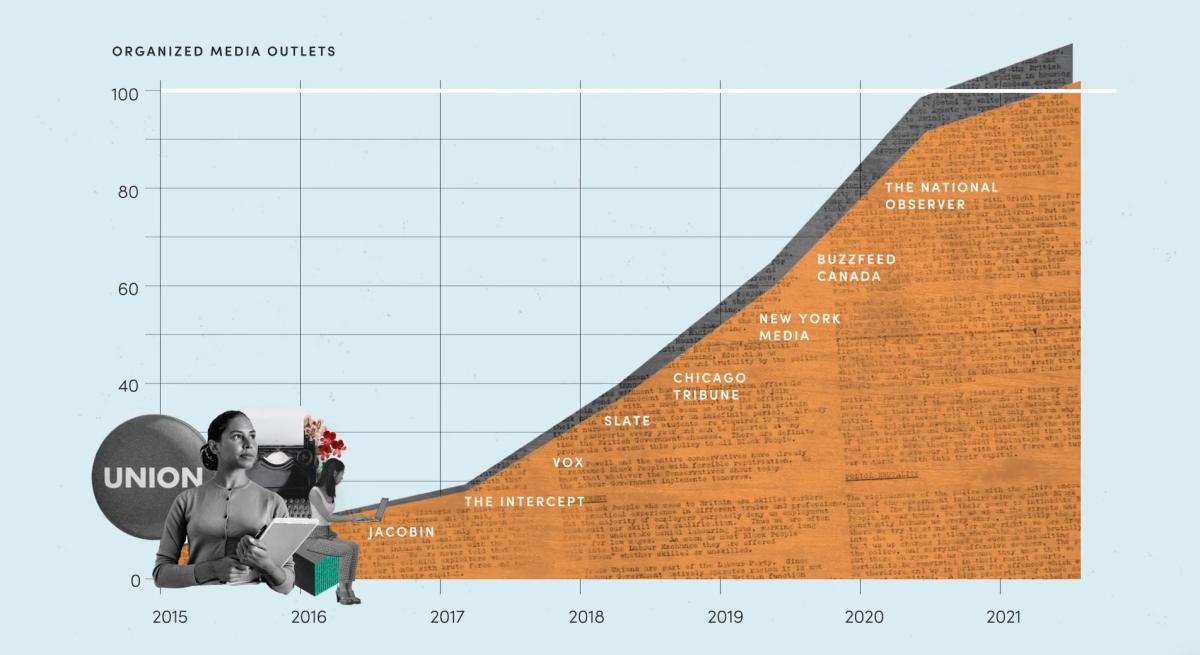
Let’s consider who’s making the news. From essential workers to gig workers and those working from home, the COVID-19 pandemic has put labour issues on journalists’ agendas. At the same time, journalists are increasingly viewing themselves as “workers first” and forming unions to address longstanding issues in their industry. By our count, since 2015, journalists have unionized at more than 80 digital and legacy media outlets, including at BuzzFeed, VICE Canada, Vox, Canadaland and 28 brands owned by the conglomerate Hearst Magazines.
Journalists’ unions are nothing new. In the 1930s, newspaper journalists unionized to protect editorial independence and collectively negotiate working conditions. By the 2000s, legacy media unions faced big challenges: traditional newsrooms were being gutted by layoffs. And digital successors, with their tech start-up feel, seemed to be culturally off-limits to unions.
So it was surprising when staff at New York-based Gawker announced in the spring of 2015 it was unionizing, kicking off a wave of unionization in digital media. Since then, thousands of new members have joined The NewsGuild, the Writers Guild of America, East and the Communication Workers of America Canada. Organizing has not let up amid the pandemic. The economic fallout from COVID-19 and the demands for racial justice elevated by protests against anti-Black racism give the media union movement renewed cause.
To understand why and how journalists are unionizing, we interviewed 50 media workers and union staff involved in this organizing push for our book, New Media Unions. Three themes emerged that persist as journalists continue to organize.


